Newsletter Pathways: Unpacking Their Influence on Privacy and Compliance in Digital Gaming Ecosystems
Wendy Zimmermann · May 16, 2026

Newsletter Pathways: Unpacking Their Influence on Privacy and Compliance in Digital Gaming Ecosystems
Newsletter pathways have become central to how digital gaming platforms manage player engagement while navigating strict privacy rules and compliance standards that govern data collection across multiple jurisdictions. These systems typically gather email addresses along with preferences and behavioral signals during account creation or promotional campaigns and they route that information through automated sequences designed to deliver updates on new releases and bonus offers.
Data Collection Mechanisms in Gaming Newsletters
Platforms integrate newsletter signups directly into user dashboards and checkout flows so that participants provide contact details in exchange for tailored content. Research indicates these pathways often capture additional metadata such as device identifiers and session durations because integrated analytics tools track open rates and click patterns automatically. Observers note that such collection practices accelerate when operators expand into new markets where player retention depends on timely communications about tournaments or seasonal events.
Regulatory frameworks require explicit consent mechanisms before any data enters these pathways and operators must document how they obtain agreement through clear interface prompts rather than pre-checked boxes. Data shows that in regions following comprehensive privacy statutes platforms now embed granular opt-in choices allowing users to select which categories of messages they receive while refusing others entirely.
Compliance Demands Across Regions
Digital gaming operators face overlapping obligations from bodies like the Federal Trade Commission in the United States and the Office of the Australian Information Commissioner which both emphasize transparent data handling for marketing communications. These requirements extend to record-keeping practices that prove consent was obtained freely and can be withdrawn without penalty to the subscriber.
By May 2026 several jurisdictions had introduced enhanced verification steps for newsletter databases to address rising concerns over data breaches that expose player profiles. Industry reports highlight that gaming companies responded by adopting encryption standards for stored subscriber lists and by conducting regular audits of third-party processors who manage delivery systems.
Privacy Risks and Mitigation Strategies
Newsletter pathways introduce specific vulnerabilities because they aggregate contact information across multiple game titles operated by the same parent company. When profiles merge without sufficient segmentation players may receive irrelevant messages that reveal more about their activity history than intended. Experts have observed that robust compliance programs now include automated suppression lists to prevent outreach to individuals who have previously opted out across any connected service.
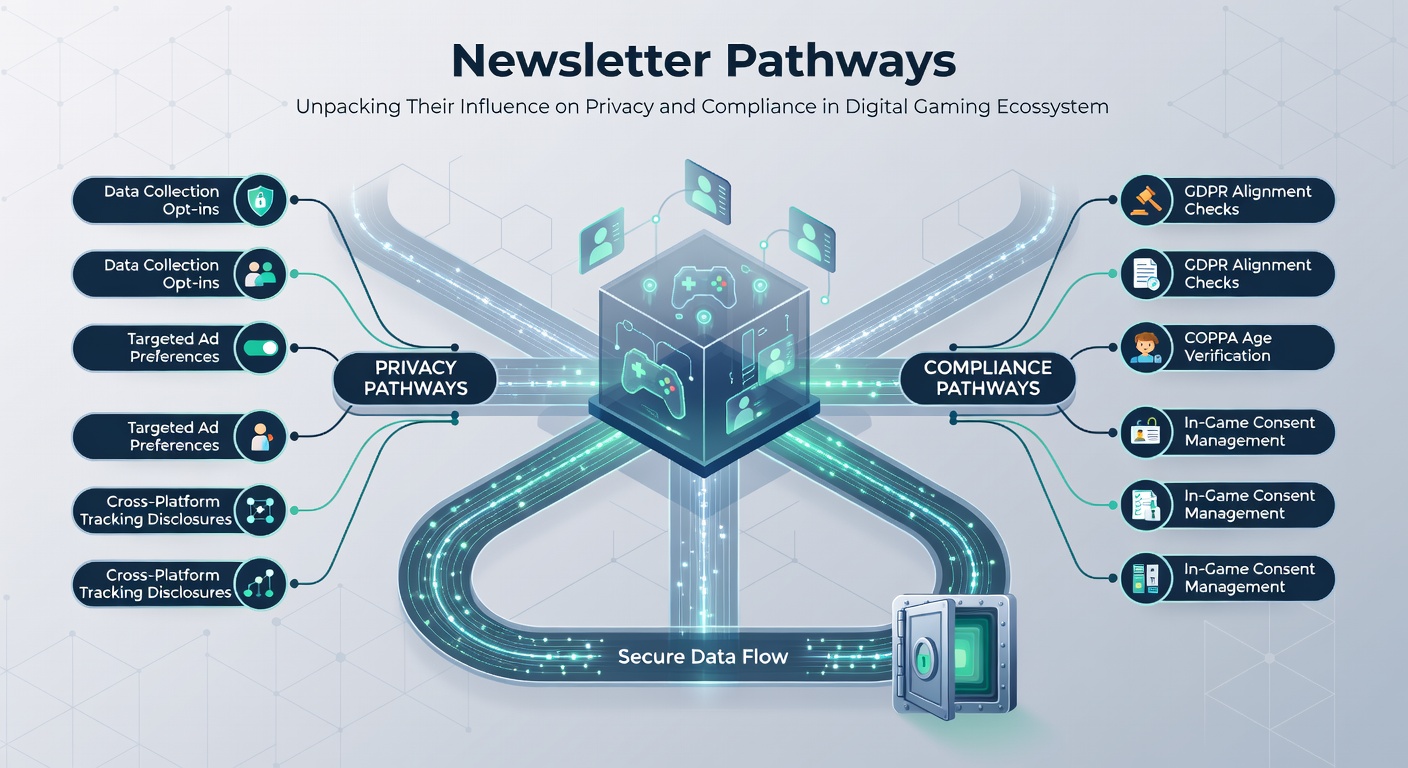
Security protocols further require segmentation of newsletter databases from core gaming servers so that a compromise in one area does not automatically expose payment details or gameplay statistics. According to findings from the International Association of Gaming Regulators collaborative standards encourage operators to implement data minimization principles that limit stored fields to only those essential for message delivery and performance measurement.
Operational Impacts on Platform Ecosystems
Compliance teams within larger gaming networks coordinate across departments to align newsletter campaigns with evolving rules on cross-border data transfers. This coordination becomes necessary when subscriber bases span continents and when platforms rely on cloud providers located in different legal environments. Figures reveal that organizations investing in centralized consent management platforms have reduced audit preparation times while maintaining consistent records that satisfy multiple regulatory inquiries simultaneously.
Player trust metrics tracked through independent surveys demonstrate that transparent newsletter practices correlate with higher retention rates in competitive markets. Operators achieve this transparency by publishing clear privacy summaries at signup points and by sending confirmation messages that restate exactly what data will be used and for how long it will be retained.
Future Developments and Industry Responses
Emerging technologies such as privacy-preserving analytics allow platforms to measure newsletter effectiveness without storing identifiable information beyond the minimum period required for campaign evaluation. Gaming associations have begun sharing best-practice frameworks that outline how these tools can integrate with existing compliance infrastructures without disrupting promotional timelines.
Continued monitoring of legislative proposals indicates that additional safeguards may soon apply to automated decision-making within newsletter recommendation engines. Those systems currently analyze past engagement to suggest content yet operators must ensure such profiling remains explainable to subscribers upon request under current transparency mandates.
Conclusion
Newsletter pathways continue to shape privacy and compliance landscapes in digital gaming by requiring precise consent management and secure data handling at every stage of collection and distribution. Platforms that maintain rigorous documentation and adopt evolving technical controls position themselves to meet regulatory expectations while sustaining effective player communications across expanding global audiences.