Tai Kin Ip Steps Down as Macau's Economy Chief: A Sudden Leadership Change in the Heart of Asia's Gaming Hub
Harper Beck · Apr 18, 2026

Tai Kin Ip Steps Down as Macau's Economy Chief: A Sudden Leadership Change in the Heart of Asia's Gaming Hub
The Announcement That Caught Observers Off Guard
In a move that rippled through Macau's tightly knit financial circles on April 16, 2026, Tai Kin Ip tendered his resignation as Secretary for Economy and Finance, citing personal reasons; the decision, proposed by Chief Executive Sam Hou Fai, swiftly gained approval from China's State Council, underscoring Beijing's direct oversight in the special administrative region's top appointments. Authorities wasted no time, announcing plans to nominate a successor for Beijing's rubber stamp, while Sam Hou Fai steps in to manage interim duties, ensuring continuity in a sector where stability often proves as crucial as the high-stakes bets on casino floors.
What's interesting here lies not just in the timing—late into Ip's tenure that began in late 2024—but in the man himself, someone who steered the helm during a period when Macau's gambling revenues hovered around the $30 billion mark annually, a figure that draws global eyes since the industry accounts for over 80% of the city's tax base according to data from the Gaming Inspection and Coordination Bureau (DICJ). Observers note how such resignations, though framed as personal, inevitably spark questions about underlying pressures in an economy so intertwined with mainland China's policies and tourism flows.
Tai Kin Ip's Tenure: Navigating the Gaming Giant's Challenges
Tai Kin Ip took the reins in late 2024, inheriting oversight of Macau's sprawling casino landscape, where six major concessionaires—Sands China, Wynn Macau, MGM China, SJM Holdings, Melco Resorts, and Galaxy Entertainment—dominate operations under strict regulatory frameworks designed to balance revenue growth with social safeguards. During his watch, these operators grappled with post-pandemic recovery efforts, implementing diversification strategies like non-gaming investments in entertainment and conventions, moves that data from industry trackers show boosted visitor numbers even as gross gaming revenue stabilized around those hefty $30 billion levels.
And yet, Ip's role extended far beyond the neon-lit resorts; as Secretary for Economy and Finance, he shaped fiscal policies that funneled casino taxes into public coffers, funding infrastructure projects adn social welfare programs, all while coordinating with Beijing on broader economic integration under the "1+4" model emphasizing tourism, finance, culture, and sports. Figures reveal how his administration pushed for enhanced cross-border travel protocols, which helped sustain the influx of high-rollers from mainland China, the lifeblood of the sector since liberalization in 2002 transformed Macau from a sleepy port into the world's largest gambling destination.
Take Sands China, for instance, whose Cotai Strip properties like The Venetian draw millions annually; under Ip's purview, operators like this one expanded loyalty programs and VIP suites, adaptations that research from the American Gaming Association highlights as key to resilience amid fluctuating travel restrictions. Similarly, Wynn Macau and MGM China focused on premium mass-market segments, while SJM Holdings, the veteran player rooted in local heritage, blended traditional gaming with modern tech integrations—efforts Ip's policies supported through streamlined licensing and tax incentives.
The Mechanics of Power in Macau: Beijing's Nod and Local Transitions
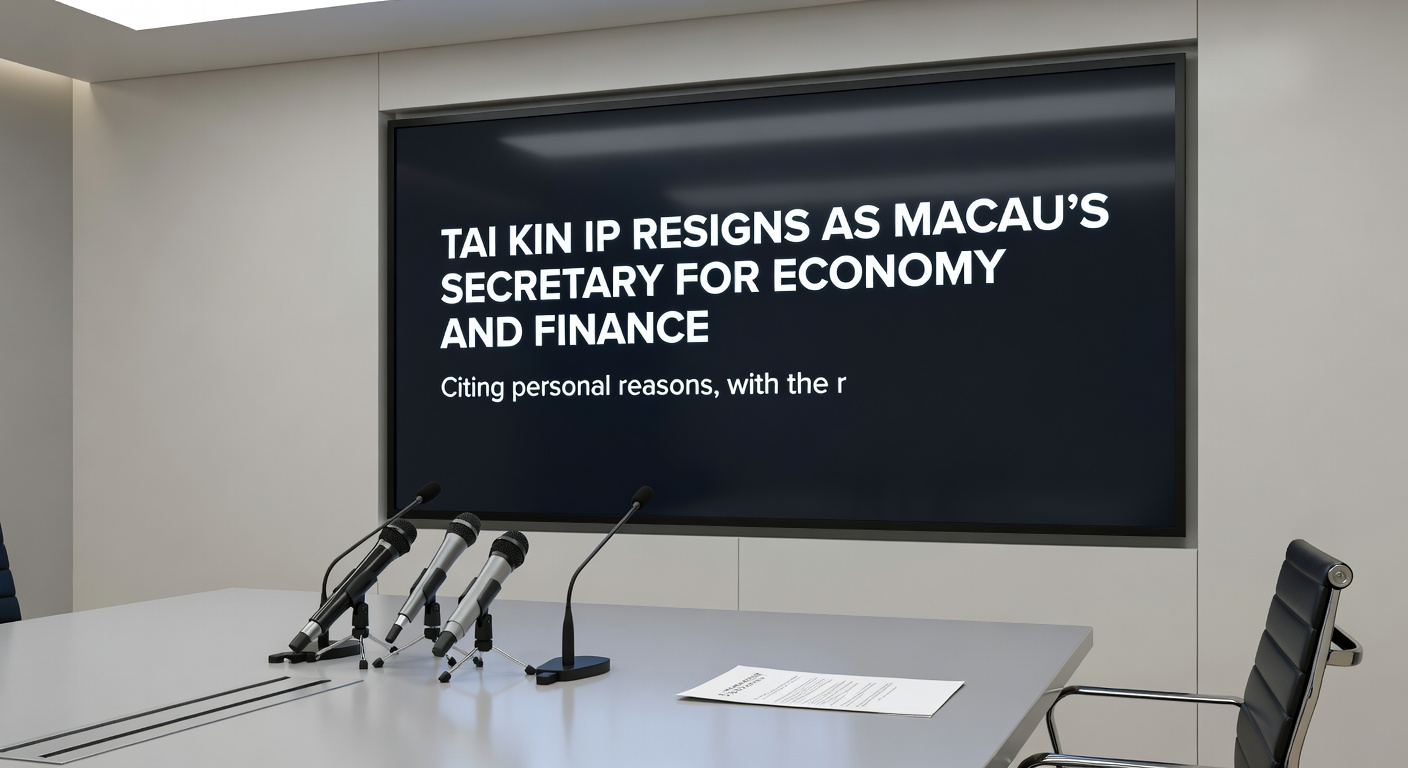
China's State Council approval process for such high-level posts reflects Macau's unique status under the "one country, two systems" framework, where local leaders propose but Beijing ultimately endorses, a dynamic that ensures alignment with national priorities like anti-corruption drives and economic diversification. Sam Hou Fai, in proposing Ip's exit, follows protocol that dates back to the 1999 handover, and now, with interim responsibilities on his plate, he oversees everything from budget allocations to regulatory compliance for the gaming giants.
But here's the thing: interim periods like this one, though brief, test the system's gears; past transitions, such as those following the 2022 leadership change, showed how quickly nominations move through channels, often within weeks, to minimize disruptions in revenue streams that fund over half of government expenditures. Melco Resorts and Galaxy Entertainment, for example, continue ramping up family-friendly attractions—think water parks and theaters—initiatives Ip championed to appeal beyond gamblers, and these persist seamlessly under Hou Fai's temporary watch.
Experts who've tracked Macau's governance point out how personal reasons often serve as the official line in resignations, allowing dignitaries to exit gracefully amid whatever private or professional currents swirl beneath; Ip's departure fits this pattern, coming after roughly 18 months in office, a stint long enough to imprint policies but short in the grand timeline of Macau's post-handover evolution.
Spotlight on the $30 Billion Behemoth: Key Players Under Ip's Watch
Sands China, led by figures attuned to global standards, operates mega-resorts that blend shopping, dining, and slots in equal measure; Wynn Macau emphasizes luxury enclaves where high-limit tables draw whales from across Asia; MGM China, with its partnerships, infuses American flair into the mix, all while SJM Holdings honors Stanley Ho's legacy through properties like Grand Lisboa. Melco Resorts pushes innovation with City of Dreams' tech-forward vibe, and Galaxy Entertainment expands Macau's footprint with massive convention spaces—each navigating the regulatory maze Ip helped maintain.
Data indicates these concessionaires, locked into 10-year licenses renewed in 2022, generated collective grosses exceeding $30 billion last year alone, a rebound that Ip's fiscal stewardship supported via measures like eased capital flows and tourism promotions; without such oversight, volatility from events like COVID lockdowns could have lingered longer. And now, as nominations for a replacement circulate, the focus sharpens on who might bring fresh momentum to diversification goals set by Beijing.
It's noteworthy that Ip's exit coincides with April 2026's seasonal uptick in visitors, a time when golden week holidays amplify casino traffic; observers watch closely, since smooth handovers preserve investor confidence in stocks tied to these operators, many listed on Hong Kong and U.S. exchanges.
Implications for Stability and teh Road Ahead
With Sam Hou Fai at the interim helm, daily operations hum along—budget drafts proceed, regulatory audits continue, and talks with concessionaires on performance targets advance—yet the nomination process holds the spotlight, as Beijing's choice will signal priorities for the coming years. Those who've studied Macau's political economy note how such shifts rarely derail the industry's core engine, given the entrenched frameworks from the DICJ and central government alignments.
Galaxy Entertainment's recent expansions, for one, exemplify the forward push Ip endorsed, incorporating sustainable practices and digital betting adjuncts compliant with mainland sensitivities; similarly, Wynn and MGM refine their mass-market pitches, strategies that thrive under consistent leadership. Turns out, the real test comes in how quickly a new secretary beds in, influencing everything from tax policies to cross-border fintech links.
People in the know highlight that personal resignations like Ip's, while abrupt, underscore the human element in Macau's technocratic setup; Hou Fai's dual role now bridges the gap, buying time for a seamless pivot that keeps the $30 billion machine oiled and spinning.
Conclusion
Tai Kin Ip's resignation, approved on April 16, 2026, marks a pivotal moment for Macau's economy and finance leadership, yet the system's resilience shines through with Chief Executive Sam Hou Fai's interim stewardship and a replacement in the works via Beijing's channels. As Sands China, Wynn Macau, MGM China, SJM Holdings, Melco Resorts, and Galaxy Entertainment press on amid their $30 billion domain, the transition reinforces Macau's status as a gaming colossus finely tuned to national directives; stability prevails, and the neon pulse endures, setting the stage for whatever fresh policies emerge next.